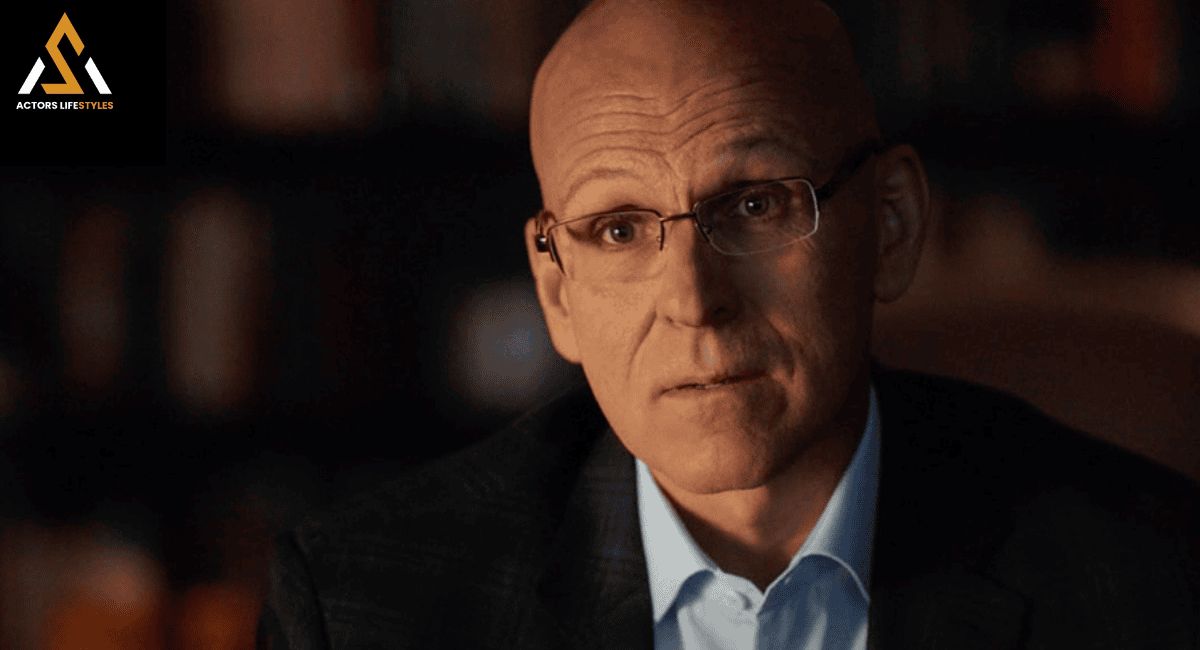
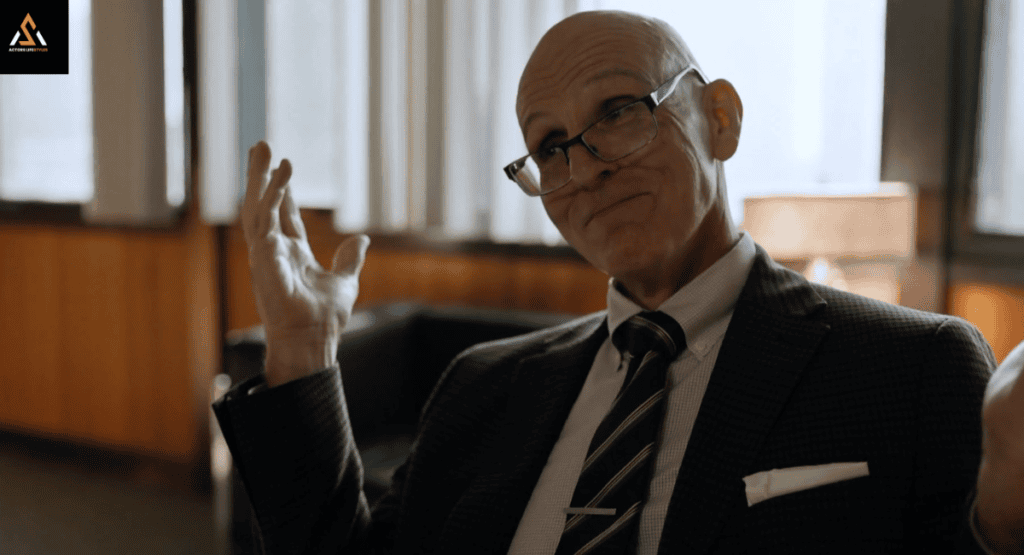
Ray Proscia is a New York-based actor, producer, and voice artist whose career spans television, film, and video games. Most people know him as Dr. Stanley Lipschitz — the dry, perceptive German therapist in the USA Network legal drama Suits — but that single role is really just one entry in a much longer story.
What makes the full picture interesting is the foundation he built before Suits ever came along. He speaks English, German, and French. He is proficient in 12 different accents. He trained under four of the most respected acting teachers in American history. And for most of his career, he worked steadily and quietly without ever becoming the kind of name that lands in entertainment headlines.
That combination — deep preparation and low profile — is exactly what separates working actors from the ones who book one good role and disappear. If you follow actor biographies and career stories, Ray Proscia’s path stands out for how deliberately it was built.
Detail
Information
Full Name
Ray Proscia
Birthplace
New York City, USA
Height
6 ft 2 in (1.88 m)
Profession
Actor, Producer, Voice Artist
Languages
English, German, French
Known For
Suits, Bull, The Man in the High Castle
Union
SAG-AFTRA
Social Media
Twitter: @RayProscia / Instagram: rayproscia
Early Life and Background
Ray Proscia grew up in New York City — which, for someone drawn to performance, is about as useful a starting point as you can get. The city has always had a density of working theatre, film shoots, and serious acting schools that almost nowhere else can match.
He started performing in school plays as a teenager. But unlike a lot of young people who enjoy being on stage, Ray Proscia was not content with the casual version of it. He treated the craft as a discipline from early on — something that required real, structured study rather than natural talent plus a few lucky breaks.
His family supported that decision, which matters more than it might sound. A lot of aspiring actors face real resistance from home when they commit seriously to the profession. Ray didn’t, and the groundedness that long-term working actors tend to share — the kind that keeps a career going through slow periods and difficult roles — tends to come from exactly that kind of early stability.
Language Skills That Changed Everything
Most actors working in Hollywood acquire a single dialect for a single role. They work with a coach for a few weeks, get the sound close enough for production purposes, and move on.
Ray Proscia went a different direction entirely. He learned German. He learned French. He put genuine time into developing 12 distinct accents — not as surface impressions, but as real linguistic tools built from the inside out.
That investment quietly changed everything for him.
Most actors spend precious mental energy managing a foreign accent mid-scene — constantly monitoring the sound, worrying if it’s slipping. Ray didn’t have that problem. The German was real. It was already part of him. So while other performers were busy maintaining a sound, he was free to actually act — to focus on the character’s psychology, his relationships, what he wanted in that moment.
Here’s the thing: audiences feel this difference even when they can’t explain it. There’s a certain authority a native speaker brings to a role that no amount of dialect coaching can fully replicate. Call it confidence versus concentration. One is effortless. The other shows — even just a little.
That fluency quietly narrowed the competition. Fewer actors could walk into those roles and make them feel real. Ray Proscia was consistently one of them.
Acting Training — The Four Teachers Who Shaped Ray Proscia
He didn’t choose a conservatory or an MFA program. Ray Proscia went directly to individual teachers — four of them, each with a different philosophy — and trained seriously under all of them.
Stella Adler argued that imagination, not personal memory, is the actor’s real instrument. Her approach asks performers to build emotional truth through the specific circumstances of the character’s world rather than drawing on their own pain. Her studio produced generations of working actors on that principle.
Lee Strasberg took the opposite position. His method, developed at the Actors Studio, rooted performance in emotional memory and psychological truth. It’s demanding, sometimes controversial, and the technique behind some of the most memorable film performances in American history — Brando, Pacino, Hoffman.
Uta Hagen focused on specificity of a different kind: real objects, real physical behavior, real relationships on stage. Her book Respect for Acting is still considered required reading in serious training programs. Her influence shows up in actors who work with genuine detail rather than general feeling.
The fourth teacher is the one most profiles leave out entirely. Alice Spivak was a respected New York acting teacher known for helping performers find emotional truth without forcing it. Her work emphasized restraint and listening — two qualities that look simple but are among the hardest to actually develop. On camera, they show up as a kind of stillness that makes other actors in the scene look better too. You can see that influence in the way Ray Proscia handles moments where a lesser performer would push for effect.
These four approaches cover different ground. Together, they built a technical foundation that most working actors never fully develop.
Dr. Lipschitz in Suits — The Role That Found Him
Search for the German therapist in Suits, and the name that comes up is Ray Proscia. He played Dr. Stanley Lipschitz across Seasons 7, 8, and 9 — a psychiatrist brought in to help the firm’s lawyers manage the psychological toll of their work environment.
The character landed because he wasn’t played as a joke. Dr. Lipschitz had a real point of view. He pushed back. He was genuinely funny without sliding into caricature — and that distinction is entirely down to how Ray Proscia played him rather than how the character was written on the page.
Suits holds an 8.4 audience rating on IMDb. The cast in those later seasons — Gabriel Macht, Rick Hoffman, Sarah Rafferty — was experienced performers working at a high level. He came in as a recurring guest and held his own in every scene, which is harder than it sounds when you’re joining an established ensemble.
In a 2020 interview with Digital Journal, he described the experience this way: “The very first day I showed up, I was embraced, and everybody was so welcoming. Working with Rick Hoffman was like meeting an old friend.”
His real German fluency was not incidental to that performance. Because the language was genuine, he didn’t have to manage it. That freed him to work on Dr. Lipschitz as a character rather than as a sound he was maintaining.
Other Major TV Roles
Bull (CBS) — Ray Proscia played Jonathan Zbyszek, a character quite different in register from Dr. Lipschitz. Sharp, controlled, and slightly unsettling rather than warm. He mentioned in the Digital Journal interview that the role came at the right moment: “Bull was amazing. It came at a really important time for me because Suits had just wrapped. I don’t really get to play this kind of role.” That last line is telling — even an actor with real range notices when a booking breaks a pattern he’s been falling into.
The Man in the High Castle (Amazon Prime Video) — This is where the language skills carried the most weight. Ray Proscia was cast as Reinhard Heydrich, a real historical figure and one of the most senior officials in the Nazi SS. Playing the role required substantial historical research, physical discipline, and the ability to project genuine menace without theatricalizing it. The series holds a 7.9 on IMDb. The contrast between Heydrich and Dr. Lipschitz tells you more about his range than any summary could.
Additional credits include Imposters on Bravo (7.8 IMDb), where he played a character called The Doctor, a guest appearance on Queen of the South (USA Network, 8.0 IMDb), two separate recurring roles on The Young and the Restless — FBI Agent Rollins and Dr. Jason Calhoun — plus guest appearances on The Rookie: Feds (ABC) and The Blacklist (NBC).
Show
Character
Network
IMDb Rating
Suits
Dr. Stanley Lipschitz
USA Network
8.4
Bull
Jonathan Zbyszek
CBS
7.1
The Man in the High Castle
Reinhard Heydrich
Amazon Prime Video
7.9
Imposters
The Doctor
Bravo
7.8
Queen of the South
Guest Role
USA Network
8.0
The Young and the Restless
FBI Agent Rollins / Dr. Jason Calhoun
CBS
—
Film and Voice Acting Work
Before the television work accumulated, Ray Proscia was appearing in major studio films. He had a role in Steven Spielberg’s Catch Me If You Can alongside Leonardo DiCaprio, and appeared in Cameron Crowe’s Vanilla Sky opposite Tom Cruise. Both directors are precise about performance at every level of the cast. Additional film credits include Think Like a Man Too and Stolen, covering comedy, thriller, and drama.
The most overlooked part of his career is the voice work. Ray Proscia voiced Leo Steiner in Call of Duty: Vanguard — one of the highest-selling game franchises in history. Voice performance at that level is genuinely demanding in its own right. You’re working without a body, without a visible scene partner, and often without a complete script to react against. The emotion has to be generated from a trained place, not from a physical stimulus. His language background and stage training both feed directly into that.
He also worked as a host and actor on the podcasts The S Factor and The Admit One Radio Hour: LUNA. These credits don’t appear in most profiles because most profiles don’t look for them. But they reflect someone who takes every medium seriously rather than waiting for the next television booking.
Advice for Young Actors
Ray Proscia has mentored young actors in Los Angeles, and his perspective on the profession cuts through a lot of the mythology around acting as a career. In the Digital Journal interview, he drew a comparison that lands differently from the usual encouragement:
“If you add up all the acting awards every four years — Oscars, Emmys, Tonys — it comes out to 250 awards. The Olympics hands out well over 1,000 medals. That shows you how hard being an actor is — it requires focus, concentration, and dedication. If this is what you want to be, my advice is to focus 100 percent.”
The point isn’t discouragement. It’s that the profession requires the same structured, multi-year commitment that serious athletes apply to their training — and most people who want to act don’t treat it that way.
His list of dream collaborators — Bryan Cranston, Sterling K. Brown, Ray Romano, Emily Blunt, Cate Blanchett — is built entirely around craft rather than box office. When asked to define success, his answer was: “Being happy and peaceful every day. That is true success in my life.” For someone who has shared sets with DiCaprio and Cruise, that’s not the answer you’d expect.
Net Worth and Earnings
Ray Proscia’s exact net worth is not publicly confirmed and should not be treated as a verified figure. What follows is an estimate based on publicly available industry rate information.
SAG-AFTRA’s published rate schedules set a baseline for guest and recurring performers on major network dramas. A recurring role across three seasons of Suits — multiple episodes per season — generates substantially more than a single guest appearance. His Bull, The Man in the High Castle, Imposters, and other credits each add to that total. Film appearances in major studio productions carry their own separate fees.
Voice work for a franchise title like Call of Duty falls under SAG-AFTRA game rates. Streaming residuals from Amazon Prime Video and USA Network catalog titles continue to generate income after production ends. Producing credits on short films adds a smaller additional stream.
Based on career length, depth of credits, and industry rate structures, an estimated range would be $1 million to $3 million. This is an industry-informed estimate, not a confirmed figure.
Income Source
Level
TV recurring and guest roles
High
Film appearances
Medium
Voice work (Call of Duty: Vanguard)
Medium
Podcast and production credits
Lower
Streaming residuals
Ongoing
Personal Life
Ray Proscia has not discussed his relationship status, marriage, or family in public interviews. That’s clearly a deliberate choice rather than an oversight. In an industry where personal disclosure is often treated as a marketing strategy, he keeps that part of his life off the record.
His professional presence is his public face — his IMDb profile, his demo reel, and the occasional interview where his genuine warmth and love for the craft come through without any effort to perform them. He’s active on Twitter at @RayProscia and Instagram at rayproscia for anyone following his current work.
FAQs
Who plays the German therapist in Suits?
Dr. Stanley Lipschitz appears in Seasons 7, 8, and 9. Ray Proscia played the character across all three seasons — not as a one-off guest, but as a genuine recurring presence with actual relationships inside the main cast.
Does Ray Proscia actually speak German?
Yes. He speaks German and French and is proficient in 12 accents. The language skills were not acquired for the Suits role — they were part of his training foundation well before that.
What video game did he work on?
He voiced Leo Steiner in Call of Duty: Vanguard.
Who were his acting teachers?
Ray Proscia trained under Stella Adler, Uta Hagen, Lee Strasberg, and Alice Spivak — four different approaches to the craft that together produced an unusually complete technical foundation.
Is Ray Proscia still acting in 2026?
Yes. His SAG-AFTRA membership is current, and his IMDb profile reflects ongoing work across television, voice acting, and short film production.
What is his height?
He stands 6 feet 2 inches tall (1.88 m).
Did he appear on daytime television?
Yes — Ray Proscia played FBI Agent Rollins and Dr. Jason Calhoun in separate appearances on The Young and the Restless. Daytime television moves at a pace that tests different skills from prime time, and he worked there comfortably.
Conclusion
Ray Proscia built a career the old-fashioned way — by actually learning the craft. Four teachers, three languages, twelve accents, and decades of steady work across formats that most actors don’t take seriously. The Suits’ role brought wider recognition, but the foundation for it was laid long before Dr. Lipschitz existed.
What the full picture shows is how little of it was accidental. The language training, the acting methodology, the range between a comedic German therapist and a Nazi SS officer — it all reflects someone who decided early what serious work required and then went and built those capabilities deliberately. That’s a rarer story than it might sound, and Ray Proscia’s career is the evidence for it.
Taha Khan is a passionate blogger and content writer who focuses on celebrity biographies, singers, musicians, and entertainment news. He creates SEO-friendly articles designed to rank on search engines and provide valuable information to readers. He is currently developing a biography-based website with high-quality, informative content.